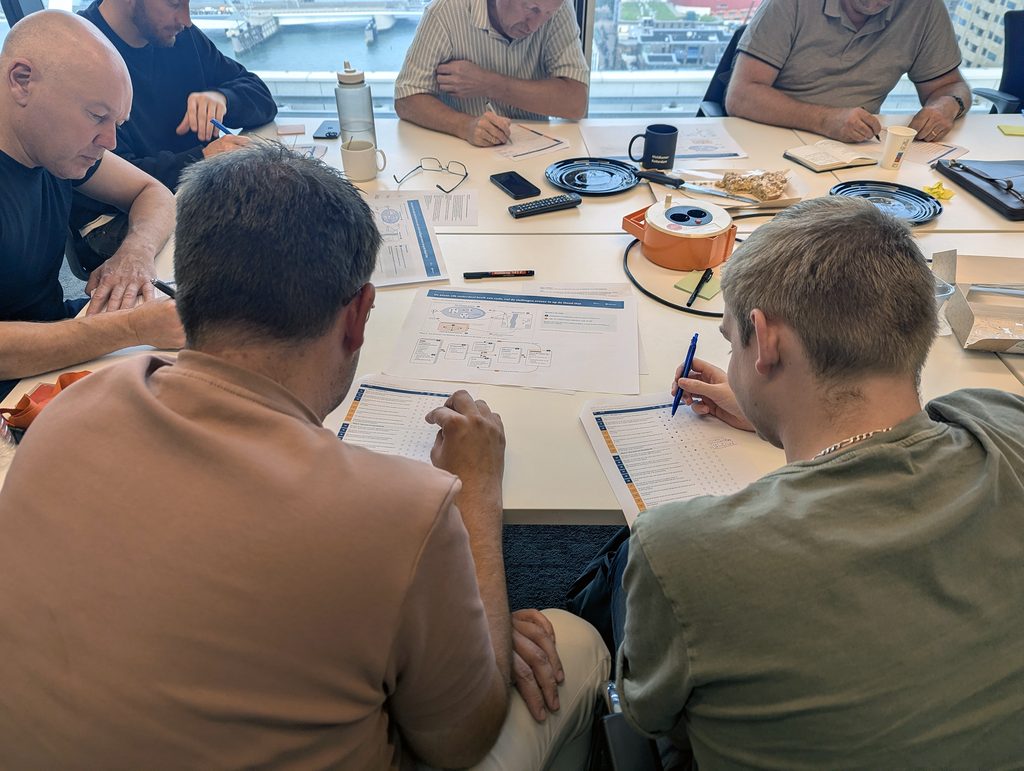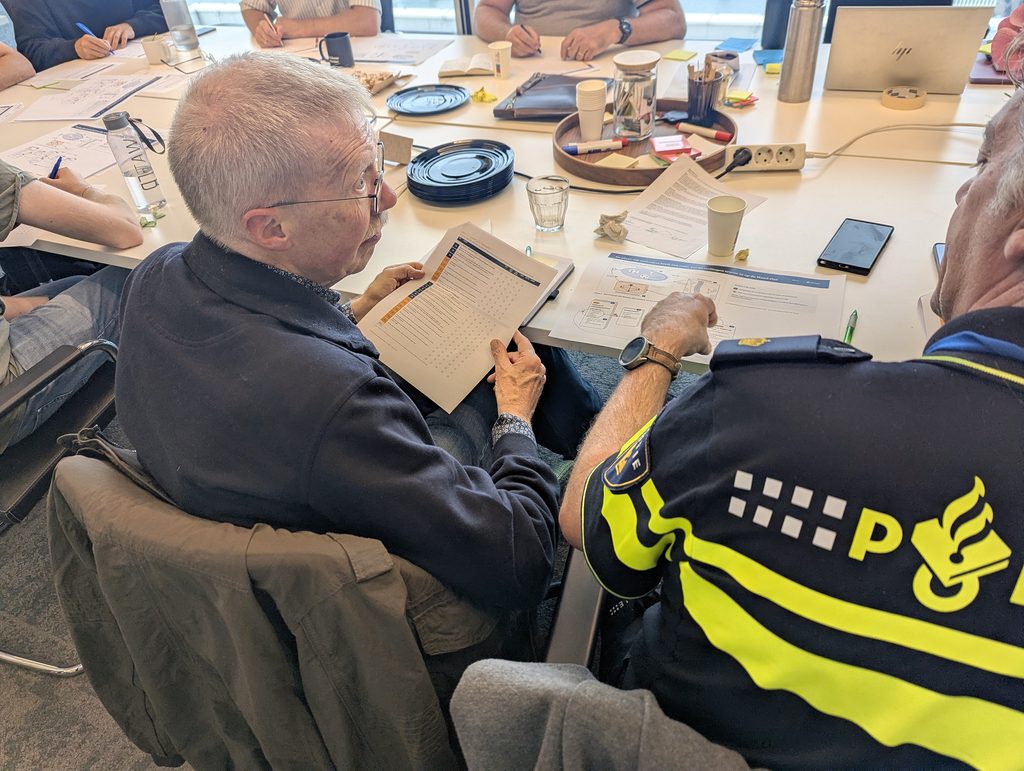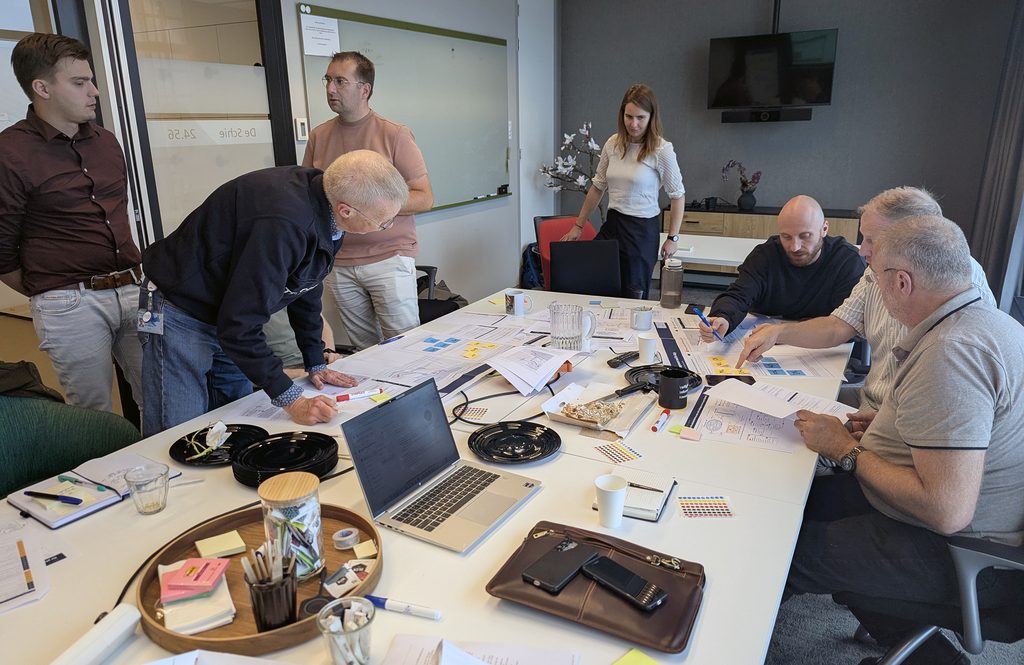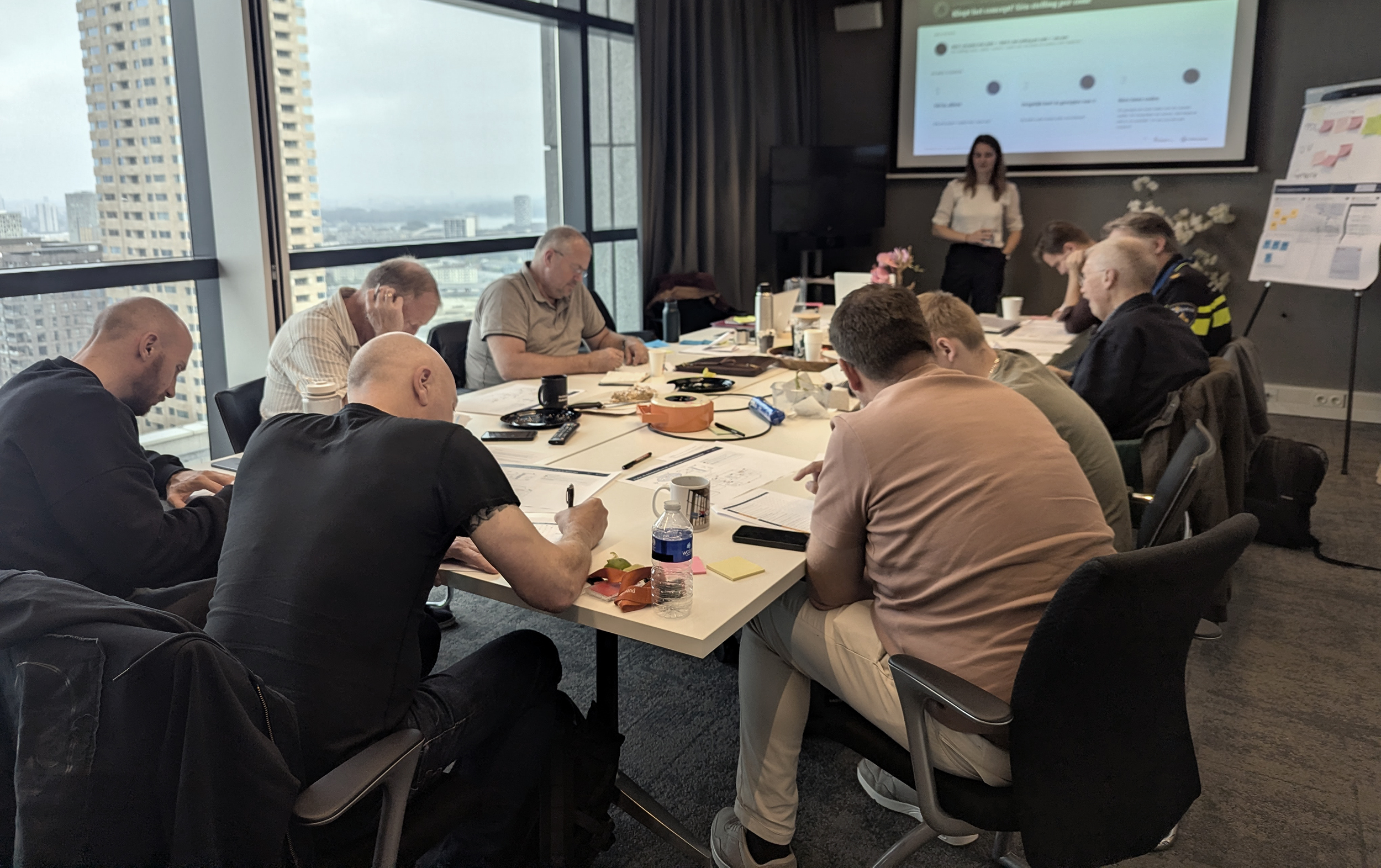
On 6 October 2026, AI Compass researchers Isabel Franke and Tamara Dert hosted a co-design workshop in Rotterdam to discuss their initial research concepts and prototypes. Ten experts in crowd management and AI attended, representing organisations including the Nationale Politie, the City of Rotterdam and Veiligheidsregio Rotterdam-Rijnmond.
Franke, a researcher in social psychology, investigates how AI changes the way crowd management teams select, share and use information. Dert, whose work focuses on systems engineering, explores which crisis management tasks can be automated using AI, which should remain under human control, and under what circumstances. The two researchers used their respective sessions to discuss and test their initial research ideas with practitioners.
Co-designing and taking a broader view
In Franke’s session, participants worked together on the design of a serious game that simulates a control room and its information flows. Players will eventually be able to experience the game both with and without AI. The session included a warm-up exercise in which participants tried to identify AI-generated images, as well as a practical exercise based on the question: “What would you say over the walkie-talkie?” These exercises helped explore how information is communicated and used in crowd management.
“With the experts, we mainly validated the scenario, the information and the game context. What needs to be included to create a simplified but realistic research environment?” Franke explains.
Dert took a broader, network-level perspective in her session, exploring what happens when collaborating teams each use their own AI system. Participants discussed statements on worksheets, critically assessed the concepts and explored their practical implications. A prototype demonstration helped put the research into context, while a warm-up question—“Can you see this happening within five years?”—encouraged participants to reflect on the future role of AI in crowd management.
“Using statements for discussion, an interactive crowd management demo and a short case exercise, we explored and tested the conceptual model we are developing,” she says. “The key questions were: what is realistic, what is still missing, and which practical questions should the model help us answer?”
Valuable input from practitioners
Both sessions provided valuable input, Franke and Dert concluded. “The practitioners help us determine what is realistic, which nuances matter and what, therefore, cannot simply be simplified away,” says Dert. Their contributions will help make both the resulting applications and the scientific research more robust and useful in practice.
Just as importantly, the sessions help keep collaboration active and strengthen the connection between research and practice. Franke concludes: “Regularly sharing our progress and gathering feedback helps us maintain strong relationships with our partners. After all, we need each other. As a university, we can never work out the solution simply by sitting behind our desks.”